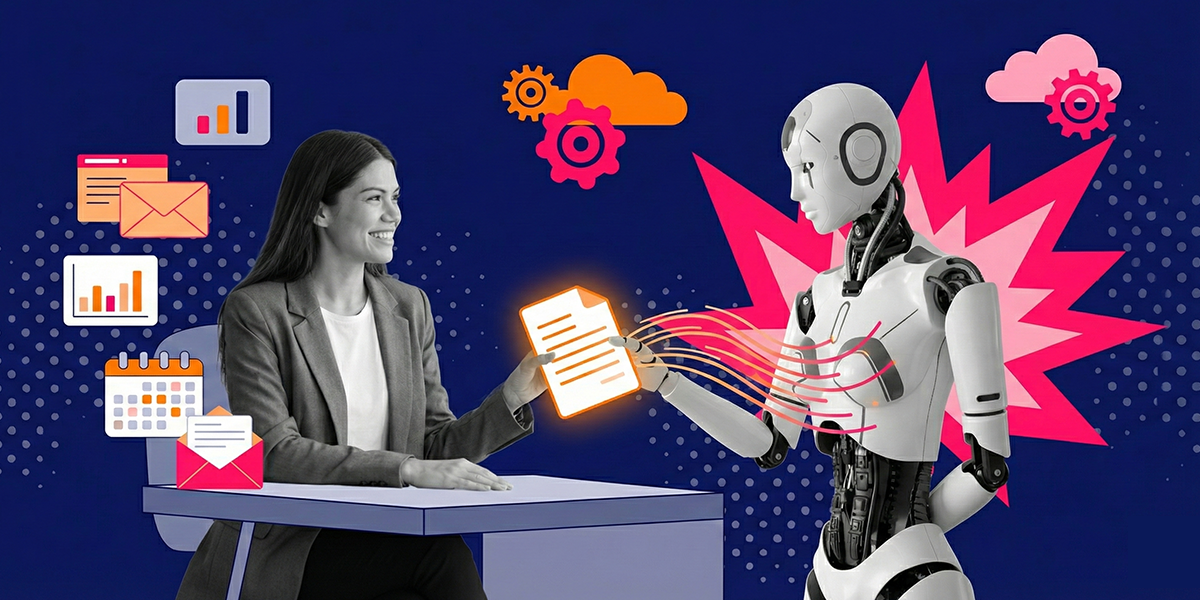

Picture this: It’s 9 AM on a Monday, and instead of drowning in your inbox, wrestling with calendar conflicts, or trying to remember what you promised to deliver by Wednesday, you’re actually doing the work that matters. Thanks to AI personal assistants, this scenario is now reality for thousands of knowledge workers worldwide. Your AI personal assistant has already triaged your emails, scheduled your meetings around your deep work blocks, and drafted the first version of that quarterly report you’ve been dreading.
This isn’t science fiction—it’s happening right now in companies around the world.
AI personal assistants are fundamentally different from the consumer voice assistants most people know. These AI personal assistants are designed specifically for business workflows, with the sophistication to handle complex, multi-step tasks. That’s not a marginal improvement—that’s the difference between barely keeping up and actually getting ahead.
But here’s the thing most executives miss: while everyone’s debating whether AI will replace human workers, the smart money is on companies that figure out how to turn their teams into AI-augmented superhumans. The question isn’t whether you’ll adopt AI personal assistants—it’s whether you’ll do it strategically or get left behind by competitors who do.
The gap between early adopters and everyone else is widening every day.
The companies winning with AI aren’t just throwing technology at problems—they’re implementing strategic frameworks that align AI capabilities with actual business outcomes. They’re identifying the right workflows to automate, choosing assistants that integrate seamlessly with their existing systems, and training their teams to work alongside AI effectively.
That’s exactly where Iterators comes in.
We’ve helped dozens of organizations successfully deploy AI personal assistants that deliver measurable results: reduced administrative overhead, faster decision-making, and teams that actually have time for strategic thinking. We know the pitfalls, the hidden costs, and more importantly, the proven strategies that turn AI adoption from an IT project into a competitive advantage.
Ready to stop playing catch-up and start getting ahead?
Schedule a free consultation with our team. We’ll analyze your current workflows, identify your highest-impact opportunities for AI integration, and show you exactly what strategic AI adoption could look like for your organization—with no generic advice, just specific insights tailored to your business.
Schedule Your Free Consultation →
The companies that win in the AI era won’t be the ones with the most technology—they’ll be the ones with the best strategy. Let’s build yours.
What Are AI Personal Assistants? Understanding the Technology
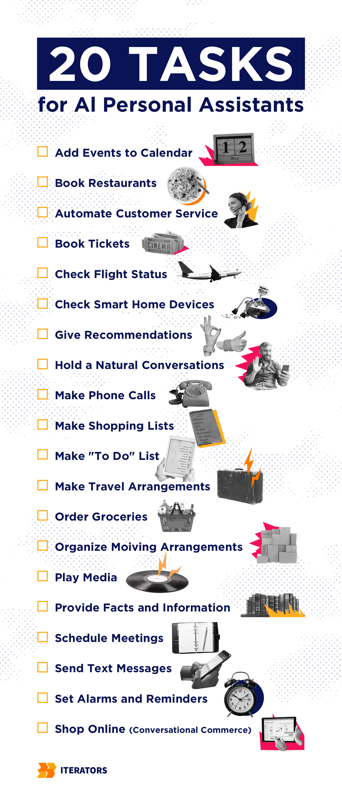
Let’s get one thing straight: we’re not talking about asking Siri to set a timer or having Alexa order more coffee pods. Modern AI personal assistants for business are sophisticated systems that can understand context, reason through complex problems, and execute multi-step workflows autonomously. Unlike simple automation tools, AI personal assistants understand context, learn from interactions, and adapt to your specific work patterns. These AI personal assistants combine multiple technologies to function as true digital colleagues.
Think of them as digital colleagues who never sleep, never forget, and never get overwhelmed by repetitive tasks. They can read through a 50-page contract and summarize the key risks, analyze your sales pipeline and suggest which deals to prioritize, or draft personalized responses to customer inquiries based on your company’s knowledge base.
The magic happens because these systems combine several breakthrough technologies that have matured simultaneously. It’s like having a perfect storm of innovation, but instead of destruction, you get unprecedented productivity.
The Technology Stack Behind AI Assistants
Large Language Models (LLMs) serve as the brain of modern AI assistants. These are the same models powering ChatGPT, Claude, and other conversational AI systems, but when properly integrated into business workflows, they become exponentially more powerful. The key insight here is that generic LLMs trained on public data are only as good as the proprietary data you feed them. It’s the difference between having a smart intern who knows general facts versus having a seasoned employee who understands your specific business context.
Natural Language Processing (NLP) allows these systems to understand not just what you’re saying, but what you actually mean. When you tell your AI assistant “find me the Johnson deal,” it knows you’re not looking for every customer named Johnson—you’re looking for that specific enterprise contract that’s been sitting in legal review for three weeks.
Machine Learning and Continuous Improvement means your AI assistant gets smarter the more you use it.To better understand the distinctions between different AI approaches powering these systems, explore our detailed comparison of machine learning vs generative AI and their specific use cases in business applications. Unlike traditional software that does exactly what it’s programmed to do, AI assistants learn from patterns, adapt to your preferences, and improve their suggestions over time. It’s like having a colleague who actually pays attention to how you work and gets better at helping you.
AI Assistants vs. Traditional Automation Tools
Here’s where most people get confused. Traditional automation tools follow rigid if-then logic: if email contains “urgent,” then forward to manager. AI assistants understand context and nuance: this email says “urgent” but it’s from a vendor trying to upsell, while this other email doesn’t use the word “urgent” but contains information about a client threatening to leave.
The difference is profound:
| Traditional Automation | AI Personal Assistants |
|---|---|
| Follows rigid rules | Understands context and nuance |
| Requires exact inputs | Works with natural language |
| Breaks when scenarios change | Adapts to new situations |
| Automates simple tasks | Handles complex workflows |
| Needs constant maintenance | Improves through use |
This flexibility is why AI assistants can handle the messy, unpredictable nature of real business work, while traditional automation tools are limited to highly structured, repetitive tasks.
The Current State of AI Assistants in the Workplace
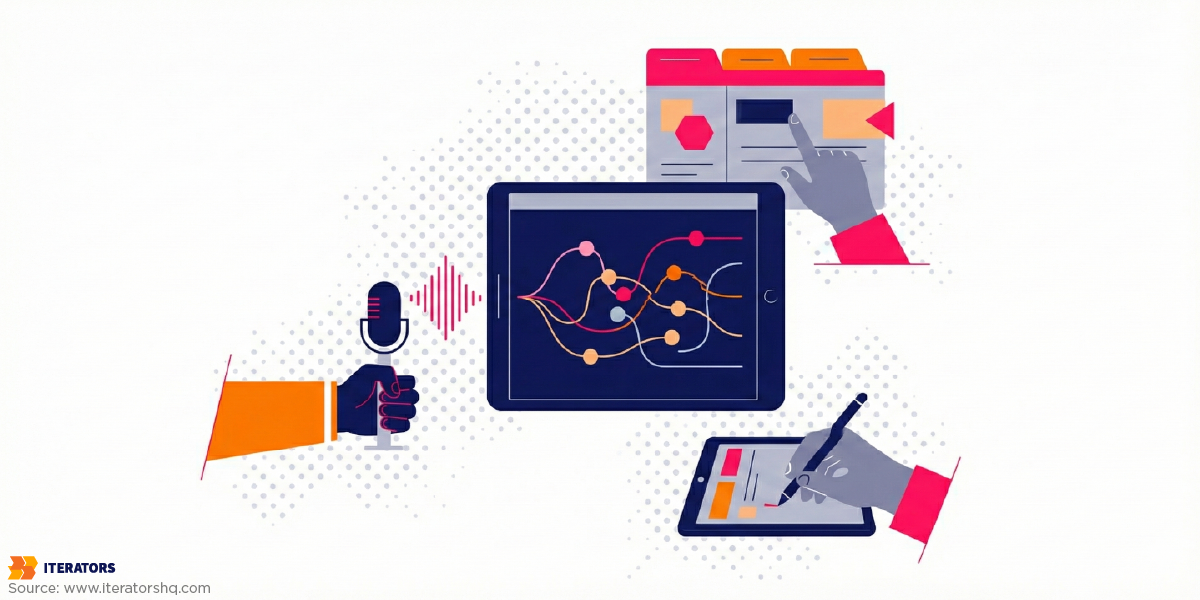
The numbers don’t lie: we’re in the middle of a workplace revolution. The global market for AI personal assistants and intelligent virtual assistants is exploding from $15.3 billion in 2023 to an expected $25.42-$27.9 billion by 2025. That’s not gradual adoption—that’s businesses scrambling to implement AI before their competitors do.
But what’s really telling is where the money is going. While consumer voice assistants get all the media attention, the enterprise market is dominated by chatbot and workflow automation solutions, which captured 68% of market share in 2024. This tells us that businesses aren’t looking for flashy demos—they want practical tools that integrate into their existing workflows and deliver measurable results.
Key AI Assistant Players and Solutions
The AI assistant landscape has three distinct tiers, each serving different organizational needs and technical sophistication levels.
Enterprise Ecosystem Solutions like Microsoft Copilot and Google Workspace AI are designed for organizations already committed to these platforms. They offer deep integration with familiar tools but can feel limiting if your workflows extend beyond their ecosystem. Think of them as the safe choice—they’ll definitely work, but they won’t necessarily transform how you operate.
Specialized Productivity Tools like Notion AI, Jasper, and Otter.ai target specific use cases with laser focus. They excel at particular tasks—content creation, meeting transcription, project management—but require you to cobble together multiple point solutions. It’s like having a toolbox full of specialized instruments versus having one versatile assistant.
Custom-Built AI Assistants represent the frontier of what’s possible. These systems are designed around your specific business logic, data sources, and workflows. They require significant upfront investment but can deliver transformational results because they’re optimized for exactly how your organization operates.
AI Assistant Adoption Trends Across Industries
Different industries are embracing AI assistants at different rates, driven by their specific pain points and regulatory environments.
FinTech companies are using AI assistants to automate compliance reporting, generate investment summaries, and provide personalized financial advice at scale. The high-stakes nature of financial services means these implementations focus heavily on audit trails and explainable AI—you need to know exactly how the assistant reached its conclusions.
HealthTech organizations leverage AI for patient communication, medical record analysis, and treatment plan optimization. The complexity here isn’t just technical—it’s regulatory. HIPAA compliance isn’t optional, which means these assistants need enterprise-grade security and privacy controls from day one.
EdTech platforms use AI assistants to personalize learning experiences, automate grading, and provide instant student support. The interesting challenge in education is balancing automation with human connection—students still need to feel like they’re learning from people, not machines.
General Enterprise adoption tends to focus on the universal pain points: email management, meeting coordination, document creation, and data analysis. These use cases have the advantage of being immediately understandable to executives and delivering quick wins that justify further investment.
How AI Personal Assistants Are Transforming Work
AI personal assistants are transforming work in five key areas: meeting management, email automation, project coordination, research synthesis, and decision support. Let’s examine how AI personal assistants deliver value in each domain. The real transformation isn’t happening in the obvious places. Sure, AI can schedule meetings and draft emails, but the profound impact is in how it’s changing the nature of knowledge work itself. We’re moving from a world where humans do the thinking and computers do the calculating, to one where humans focus on strategy and creativity while AI handles the analysis and synthesis.
How AI Assistants Handle Meeting Management and Scheduling
Let’s start with something everyone can relate to: the meeting nightmare. The average knowledge worker spends 23 hours per week in meetings, and roughly half of those meetings are considered unnecessary or poorly run according to Harvard Business Review’s study on meeting effectiveness.
AI personal assistants don’t just schedule meetings—they optimize them. These AI personal assistants analyze your calendar patterns, understand your energy levels throughout the day, and protect your deep work time. They analyze your calendar patterns, understand your energy levels throughout the day, and protect your deep work time. When someone requests a meeting, your AI can suggest optimal times based on all participants’ schedules, automatically send prep materials, and even decline meetings that don’t align with your priorities.
But here’s where it gets interesting: AI assistants can attend meetings for you. They transcribe conversations, identify action items, and send follow-up summaries to all participants. Some advanced systems can even represent your perspective in routine meetings, asking clarifying questions and providing updates on your behalf.
The time savings are substantial. Organizations implementing AI-powered meeting management report saving an average of 4-6 hours per week per employee. For a 100-person company, that’s 500 hours of productivity gained every week—equivalent to hiring 12 additional full-time employees.
AI Assistant Email and Communication Automation
Email management is where AI assistants really shine, because email is simultaneously crucial and soul-crushing. The average executive receives 121 emails per day and spends 28% of their workweek managing email as reported by McKinsey’s research on workplace productivity.
Modern AI personal assistants don’t just filter spam—they understand context, priority, and urgency. AI personal assistants can automatically categorize emails by project, urgency, and required action. They can automatically categorize emails by project, urgency, and required action. They draft responses in your voice, pulling information from your CRM, calendar, and previous conversations. They can even handle entire email threads autonomously for routine inquiries.
The sophistication here is remarkable. Your AI assistant learns that emails from certain clients always require immediate attention, that vendor pitches can be politely declined with a standard response, and that internal requests need to be routed based on current project priorities.
One of our clients in the legal industry implemented an AI email assistant that reduced partner email processing time by 60%. The AI handles routine client communications, schedules depositions, and flags urgent matters for immediate attention. The partners now spend their time on high-value legal work instead of email triage.
AI-Powered Task and Project Management
Traditional project management tools tell you what needs to be done. AI personal assistants figure out how to get it done efficiently. These AI personal assistants break down complex projects into manageable tasks and estimate realistic timelines.
They break down complex projects into manageable tasks, estimate realistic timelines based on historical data, and automatically adjust schedules when priorities change. They can identify bottlenecks before they become problems and suggest resource reallocation to keep projects on track.
The real power comes from integration across systems. Your AI assistant knows your team’s capacity, understands dependencies between tasks, and can predict which projects are at risk of missing deadlines. It can automatically reassign work when someone gets sick, find subject matter experts for specific questions, and even draft status updates for stakeholders.
AI Assistant Research and Information Synthesis
This is where AI personal assistants become truly transformational. Instead of spending hours on research, AI personal assistants can compile comprehensive reports in minutes. Instead of spending hours researching market trends, competitive analysis, or regulatory changes, you can ask your AI assistant to compile comprehensive reports in minutes.
The key is that these aren’t generic web searches—AI assistants can access your proprietary data, understand your specific context, and synthesize information in exactly the format you need. They can analyze customer feedback trends, compile competitive intelligence from multiple sources, and even generate strategic recommendations based on your business objectives.
For example, instead of manually reviewing hundreds of customer support tickets to identify common issues, your AI assistant can analyze patterns, categorize problems, and suggest solutions—all while you’re sleeping.
AI-Driven Decision Support and Analytics
Perhaps the most exciting application is using AI personal assistants for strategic decision support. AI personal assistants can process vast amounts of data and identify patterns humans might miss.They can process vast amounts of data, identify patterns humans might miss, and present insights in actionable formats.
They excel at scenario analysis: “What happens to our revenue if we increase prices by 5% but lose 10% of our customers?” or “Which marketing channels should we invest in based on our current customer acquisition costs?” AI assistants can also optimize resource allocation and team assignments through intelligent pairing—discover how matching algorithms can help your users get perfect pairings in everything from project staffing to customer-service rep assignments.
The speed of analysis is game-changing. What used to require days of spreadsheet work can now be completed in minutes, allowing for more iterative decision-making and rapid course correction when strategies aren’t working.
AI Assistant Business Impact: ROI and Productivity Gains
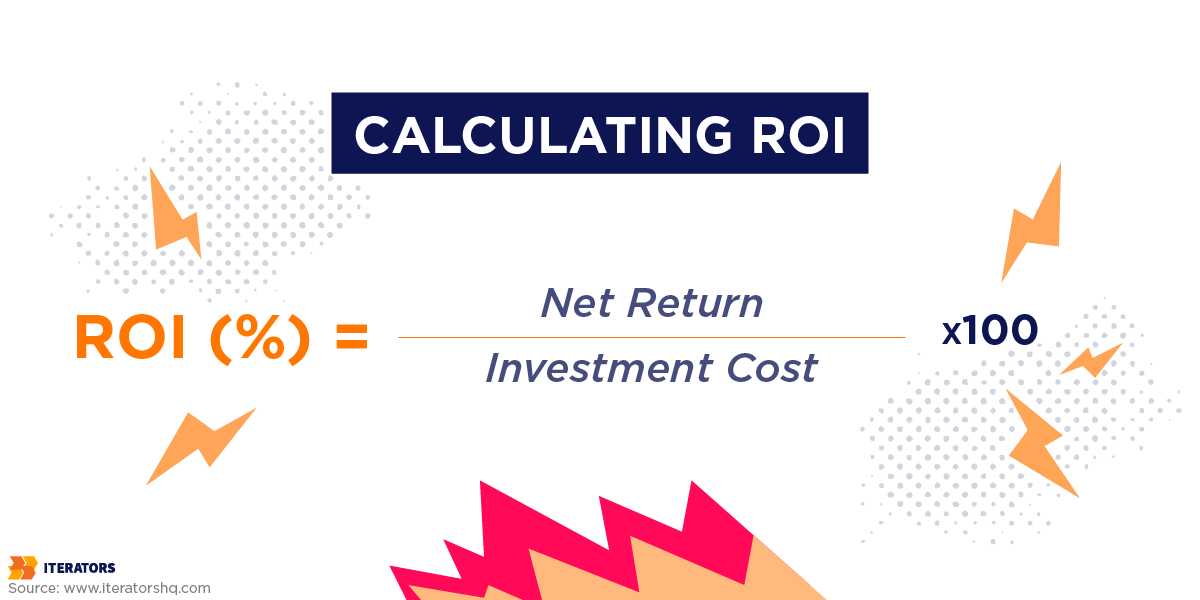
The ROI of AI personal assistants is substantial and measurable. Organizations implementing AI personal assistants report productivity gains between 25-40%, with workers using AI personal assistants completing tasks one-third faster than without them.
Let’s talk numbers, because that’s what ultimately matters to business leaders making investment decisions.
The productivity gains from AI assistants aren’t marginal—they’re substantial. Workers using generative AI demonstrate 33% higher productivity in each hour they use the technology, according to McKinsey’s comprehensive study on AI’s economic potential. When employees actively engage with AI tools, they complete tasks one-third faster than without them.
This translates to concrete time savings: AI users save an average of 5.4% of their work hours, which equals approximately 2.2 hours per week. For a knowledge worker earning $100,000 annually, that’s $2,700 worth of time saved every year. Multiply that across your entire team, and the numbers become compelling quickly.
AI Assistant Real-World Case Studies
Startup Example: 50-Person Tech Company
A growing SaaS company implemented AI personal assistants across their customer success, sales, and engineering teams. The AI personal assistants delivered immediate results.The results after six months:
- Customer success team reduced response time from 4 hours to 30 minutes
- Sales team increased qualified leads by 40% through automated lead scoring and follow-up
- Engineering team cut documentation time by 50% through automated code commenting and technical writing
Total investment: $150,000 annually Time savings: 1,200 hours per month across all teams ROI: 320% in the first year
Mid-Size Company Example: 500-Person Professional Services Firm
A consulting firm implemented AI assistants for proposal writing, research, and client communication:
- Proposal development time reduced from 40 hours to 12 hours per proposal
- Research tasks automated, saving 15 hours per week per consultant
- Client communication streamlined, reducing administrative overhead by 30%
Total investment: $500,000 annually Productivity gains: Equivalent to hiring 45 additional consultants ROI: 280% in 18 months
The pattern is clear: organizations that implement AI assistants strategically see returns between 250-500% within the first two years. The key word here is “strategically”—throwing AI at random problems doesn’t work, but targeting specific, high-volume workflows delivers exceptional results.
AI Assistant ROI Calculation Framework
To calculate your potential ROI, consider this framework:
- Identify high-volume, repetitive tasks in your organization
- Calculate current time investment (hours per week × hourly cost)
- Estimate AI efficiency gains (typically 30-50% time savings)
- Factor in implementation costs (software, training, integration)
- Project payback period (usually 6-12 months for well-designed implementations)
The companies achieving the highest ROI focus on workflows that are simultaneously high-volume and high-value. Customer support, sales follow-up, content creation, and data analysis tend to be the sweet spots.
Implementation Strategies: Getting Started with AI Assistants
The difference between successful AI implementations and expensive failures usually comes down to strategy, not technology. Too many organizations jump into AI without understanding their specific needs or having a clear plan for integration. Successfully implementing AI personal assistants requires more than just purchasing software. Organizations that achieve the best results with AI personal assistants follow a strategic, phased approach.
Assessing Your Organization’s AI Assistant Needs
Before evaluating any AI personal assistants, you need to understand where your organization actually spends time. The most successful AI personal assistant implementations start with a thorough workflow audit.
Start with a workflow audit. Track how your team spends their time for one week. You’ll probably be surprised by how much time goes to email management, meeting preparation, status updates, and information gathering. These are prime candidates for AI automation.
Identify your biggest bottlenecks. Where do projects get stuck? What tasks do people consistently delay or avoid? What processes require the most back-and-forth communication? These friction points often indicate opportunities for AI intervention.
Evaluate your team’s technical readiness. Some organizations can implement sophisticated AI workflows immediately, while others need to start with simpler tools and build up their capabilities. Be honest about your team’s comfort level with new technology.
Consider your data landscape. AI assistants are only as good as the data they can access. If your information is scattered across multiple systems without integration, you’ll need to address that before AI can be truly effective.
AI Assistants: Build vs. Buy Decision
This is where many organizations make costly mistakes. The temptation to build custom AI solutions is strong, especially for technically sophisticated teams, but the data is sobering: internal AI projects fail at roughly twice the rate of external partnerships.
When to buy off-the-shelf solutions:
- Your needs align with standard business processes
- You want to see results quickly (within 3-6 months)
- You don’t have specialized AI/ML expertise in-house
- Integration with existing tools is more important than customization
When to invest in custom development:
- Your workflows are highly specialized or unique
- Compliance requirements mandate specific security controls
- You need tight integration with proprietary systems
- You view AI capability as a core competitive advantage
When to partner with specialists:
- You need custom functionality but lack internal expertise
- You want to move quickly without the risk of internal builds
- You require enterprise-grade security and compliance
- You prefer to focus your internal team on core business functions
The partnership approach often delivers the best of both worlds: custom functionality designed for your specific needs, built by experts who understand enterprise requirements, delivered faster than internal builds.
Integrating AI Assistants with Existing Tools
The biggest implementation mistake is treating AI personal assistants as standalone tools. AI personal assistants need to integrate seamlessly with your existing technology stack to deliver maximum value. They need to integrate seamlessly with your existing technology stack to deliver maximum value.
API-first approach: Ensure any AI solution can connect to your CRM, project management tools, communication platforms, and data warehouses. The goal is to eliminate manual data entry and context switching.
Single sign-on (SSO) integration: Your team shouldn’t need separate logins for AI tools. They should work within existing authentication systems and respect your current security policies.
Workflow automation: The most powerful implementations connect AI assistants to workflow automation platforms like Zapier, Microsoft Power Automate, or custom integration layers. This allows AI insights to trigger actions across your entire technology stack.
AI Assistant Change Management and Adoption
Even the best AI assistant is useless if your team doesn’t adopt it. Successful implementation requires careful attention to change management and user experience.
Start with champions: Identify team members who are excited about AI and let them become internal advocates. Their enthusiasm and success stories will convince skeptics more effectively than any executive mandate.
Focus on quick wins: Choose initial use cases that deliver obvious value quickly. Email management, meeting scheduling, and document drafting are usually safe bets because everyone understands the time savings immediately.
Provide comprehensive training: Don’t assume people will figure out AI tools on their own. Invest in proper training that goes beyond basic features to show how AI can transform their specific workflows.
Measure and communicate success: Track concrete metrics like time saved, tasks automated, and productivity gains. Share these wins regularly to maintain momentum and justify continued investment.
Security, Privacy, and Compliance Considerations

Here’s where many AI implementations hit a wall: the moment you start processing sensitive business data, security and compliance become non-negotiable requirements, not nice-to-have features. Security and privacy are critical considerations when implementing AI personal assistants. Since AI personal assistants access sensitive business data, enterprise-grade security is non-negotiable.
Data Privacy in AI Systems
AI assistants need access to your data to be useful, but that access creates privacy risks that must be carefully managed. The challenge is balancing functionality with protection.
Data minimization: AI systems should only access the minimum data necessary for their function. If an AI assistant helps with email management, it doesn’t need access to your financial systems or HR records.
Purpose limitation: Data should only be used for its intended purpose. An AI assistant trained to help with customer support shouldn’t use that data for marketing analysis without explicit consent.
Data residency: For organizations with international operations, you need to ensure AI processing complies with local data residency requirements. EU data must stay in the EU, certain government data must remain on-premises, etc.
User consent and control: Employees need to understand what data AI systems access and have some control over that access. Transparency builds trust and reduces resistance to adoption.
AI Assistant Industry-Specific Compliance
Different industries have different compliance requirements that AI implementations must respect.
HIPAA for HealthTech: Any AI assistant processing protected health information must be HIPAA compliant. This means business associate agreements with vendors, audit logging of all data access, encryption at rest and in transit, and strict access controls.
SOC 2 for SaaS: Software companies need SOC 2 Type II compliance for their AI systems, demonstrating proper security controls around availability, processing integrity, confidentiality, and privacy. The AICPA’s SOC 2 framework provides the standard for evaluating AI system security controls.
Financial regulations for FinTech: Financial services companies must ensure AI systems comply with regulations like SOX, PCI DSS, and various banking regulations. This often requires on-premises deployment or specialized cloud configurations. For FinTech companies exploring advanced security architectures, our analysis of AI in blockchain technology demonstrates how distributed ledger systems can enhance AI assistant security and compliance.
AI Assistant Security Best Practices
Zero-trust architecture: Assume no system is inherently secure. Every AI assistant should authenticate users, validate permissions, and log all activities.
Encryption everywhere: Data should be encrypted at rest, in transit, and during processing. This includes AI model weights, training data, and all user interactions.
Regular security audits: AI systems should undergo regular penetration testing and security reviews. The threat landscape evolves quickly, and your defenses need to keep pace. Organizations implementing AI assistants should also consider how these systems can enhance their overall security posture—learn more about generative AI applications in cybersecurity for threat detection and response.
Incident response plans: Have clear procedures for handling AI-related security incidents. What happens if an AI assistant is compromised? How do you contain the damage and restore normal operations?
Custom AI Assistant Development: When and Why
Most organizations start with off-the-shelf AI personal assistants, but there comes a point where custom development of AI personal assistants becomes necessary to unlock full potential.
Limitations of Generic AI Assistant Solutions
Generic AI assistants are built for the common denominator—they work reasonably well for standard business processes but struggle with industry-specific workflows, proprietary data formats, or complex integration requirements.
Context limitations: Generic AI assistants don’t understand your business domain deeply. They might know general facts about your industry but miss the nuances that make your company unique.
Integration constraints: Off-the-shelf solutions typically offer limited integration options. You might be able to connect to popular tools like Slack or Salesforce, but integrating with proprietary systems often requires workarounds.
Customization boundaries: While many AI tools offer some customization, they’re fundamentally designed around standard use cases. If your workflow doesn’t fit their model, you’re out of luck.
Data security concerns: Generic solutions often process data in shared environments, which may not meet your security requirements. Custom solutions can be deployed in your own infrastructure with full control over data handling.
Benefits of Custom AI Assistant Development
Domain-specific expertise: Custom AI assistants can be trained on your specific industry knowledge, company procedures, and historical data. This makes them far more accurate and useful than generic alternatives.
Seamless integration: Custom solutions can integrate deeply with your existing systems, accessing proprietary databases, legacy applications, and specialized tools that generic solutions can’t touch.
Competitive advantage: A well-designed custom AI assistant becomes a strategic asset that competitors can’t easily replicate. It embodies your unique processes and institutional knowledge.
Scalability and control: You control the roadmap, can scale resources as needed, and aren’t dependent on a vendor’s priorities or pricing changes.
Key Features of Enterprise-Grade Custom AI Assistants
Multi-modal capabilities: Advanced AI assistants can process text, voice, images, and documents, providing a more natural and comprehensive interface for complex workflows.
Workflow orchestration: They can manage entire business processes from start to finish, coordinating between different systems and people to ensure nothing falls through the cracks.
Learning and adaptation: Custom assistants can continuously learn from your specific data and feedback, becoming more accurate and useful over time.
Role-based access: Different team members see different capabilities and data based on their roles and permissions, ensuring security while maximizing utility.
Custom AI personal assistants offer significant advantages over generic solutions. These custom AI personal assistants can be trained on your specific industry knowledge and company procedures.
The AI Assistant Development Process
Discovery and requirements gathering: Understanding your specific needs, workflows, and success criteria. This phase is crucial—rushing through it leads to solutions that miss the mark.
MVP development: Building a minimum viable product that addresses your core use cases. This allows for early testing and feedback without over-investing in features that might not be needed.
Iterative improvement: Continuously refining the assistant based on user feedback and changing business needs. AI development is inherently iterative—you learn what works by using it.
Integration and deployment: Connecting the assistant to your existing systems and deploying it in a way that fits your security and operational requirements.
At Iterators, we’ve found that the most successful custom AI assistant projects follow a structured approach that prioritizes business value over technical sophistication. For organizations considering building custom AI solutions from scratch, our comprehensive guide on how to build an AI software solution provides essential insights into the development process, technology stack decisions, and project planning considerations. We start by identifying the workflows that consume the most time and deliver the least value, then build AI solutions that automate or augment those processes. The result is measurable productivity gains that justify continued investment and expansion.
The Future of AI Assistants in the Workplace
The future of AI personal assistants is evolving rapidly. Next-generation AI personal assistants will feature multimodal capabilities, autonomous decision-making, and emotional intelligence that makes them feel like true colleagues. The AI assistant landscape is evolving rapidly, with new capabilities emerging that will fundamentally change how we think about human-AI collaboration. PwC’s research on AI’s business impact suggests that organizations adopting AI assistants early will gain significant competitive advantages as these technologies mature.
Multimodal AI Assistants
The next generation of AI personal assistants won’t just process text—they’ll seamlessly handle voice, images, documents, and video. These multimodal AI personal assistants will open up entirely new use cases. This multimodal capability opens up entirely new use cases.
Imagine an AI assistant that can join video calls, analyze participants’ facial expressions and tone of voice to gauge engagement, automatically generate meeting summaries, and follow up with personalized action items based on each person’s communication style. Or consider an assistant that can review architectural drawings, compare them to building codes, and flag potential issues before construction begins.
This isn’t science fiction—the technology exists today, and we’re starting to see early implementations in specialized industries.
AI Personal Assistants as Autonomous Agents
Current AI assistants are reactive—they respond to requests and complete specific tasks. The future belongs to autonomous agents that can manage entire workflows independently.
These agents will understand your business objectives, monitor relevant metrics, and take action when needed. They might automatically adjust marketing spend based on conversion rates, reorder inventory when stock levels get low, or escalate customer issues that match certain risk patterns.
The transition from assistant to autonomous agent represents a fundamental shift in how we think about AI in the workplace. Instead of humans directing AI, we’ll have AI systems that understand business goals and work toward them independently, with humans providing oversight and strategic direction.
AI Assistants with Emotional Intelligence and Context Awareness
Future AI assistants will understand not just what you’re saying, but how you’re feeling and what you’re trying to accomplish in the broader context of your work and life.
They’ll recognize when you’re stressed and automatically reschedule non-critical meetings, understand when you’re in a creative flow state and protect your focus time, and adapt their communication style based on your preferences and current mood.
This emotional intelligence will make AI assistants feel more like trusted colleagues than tools, fundamentally changing the nature of human-AI collaboration.
Common AI Assistant Challenges and How to Overcome Them
Despite the tremendous potential of AI assistants, implementation isn’t always smooth. Understanding common challenges and their solutions can help you avoid costly mistakes.While AI personal assistants offer tremendous benefits, implementation challenges exist. Understanding these AI personal assistant challenges and their solutions helps avoid costly mistakes.
Overcoming AI Assistant Resistance to Adoption
The Challenge: Many employees view AI personal assistants with suspicion, fearing job displacement. The Solution: Focus on how AI personal assistants make people more effective rather than replacing them.
The Solution: Focus on augmentation, not replacement. Show how AI assistants make people more effective at their jobs rather than threatening their roles. Start with voluntary adoption among enthusiastic early adopters, then let their success stories convince skeptics.
Best Practices:
- Provide comprehensive training and support
- Communicate clearly about AI’s role in the organization
- Celebrate wins and share success stories
- Address concerns honestly and directly
AI Assistant Integration Complexity
The Challenge: Modern organizations use dozens of different software tools, and getting AI assistants to work seamlessly across all of them can be technically challenging.
The Solution: Prioritize integrations based on impact and start with your most critical systems. Use API-first solutions that can grow with your needs, and consider working with partners who specialize in enterprise integrations.
Best Practices:
- Map your current technology stack before choosing AI solutions
- Prioritize integrations that eliminate manual data entry
- Plan for ongoing integration maintenance and updates
- Consider consolidating tools to simplify integration requirements
AI Assistant Data Quality Issues
The Challenge: AI assistants are only as good as the data they’re trained on. Poor data quality leads to inaccurate outputs and user frustration.
The Solution: Invest in data cleaning and standardization before implementing AI. Establish data governance processes to maintain quality over time.
Best Practices:
- Audit your data quality before AI implementation
- Establish clear data governance policies
- Implement automated data validation where possible
- Train users to provide high-quality inputs to AI systems
AI Assistant Cost Concerns
The Challenge: AI implementation can require significant upfront investment, and ROI isn’t always immediately apparent.
The Solution: Start with pilot projects that have clear success metrics and quick payback periods. Use early wins to justify broader investment.
Best Practices:
- Calculate ROI based on time savings and productivity gains
- Start with high-impact, low-risk use cases
- Track and communicate concrete benefits
- Plan for gradual expansion based on proven results
Choosing the Right AI Assistant Solution for Your Business
The AI assistant market is crowded with options, from simple chatbots to sophisticated enterprise platforms. Making the right choice requires a systematic evaluation process. Selecting the right AI personal assistants for your business requires systematic evaluation. The AI personal assistant market offers numerous options, from simple chatbots to sophisticated enterprise AI personal assistants.
AI Assistant Evaluation Criteria Framework
Functionality: Does the solution address your specific use cases? Can it handle the complexity of your workflows? Does it integrate with your existing tools?
Scalability: Can the solution grow with your organization? Will it handle increased data volume and user load? Can you add new capabilities as your needs evolve?
Security: Does the solution meet your security requirements? Is it compliant with relevant regulations? How is data handled and protected?
User Experience: Is the interface intuitive? Will your team actually use it? How much training is required?
Total Cost of Ownership: What are the ongoing costs beyond initial licensing? What about integration, training, and maintenance costs?
Vendor Stability: Is the vendor financially stable? Do they have a track record of supporting enterprise customers? What’s their roadmap for future development?
Questions to Ask AI Assistant Vendors
- How does your solution handle our specific industry requirements?
- What integrations are available, and how difficult are they to implement?
- How do you ensure data security and compliance?
- What’s included in your support and training programs?
- How do you handle software updates and new feature releases?
- What’s your typical implementation timeline?
- Can you provide references from similar organizations?
- What happens to our data if we decide to switch vendors?
AI Assistant Vendor Red Flags to Watch For
- Vendors who promise unrealistic results or timelines
- Solutions that require significant changes to your existing workflows
- Lack of transparency about how the AI actually works
- Poor integration capabilities or proprietary data formats
- Unclear pricing or hidden costs
- Limited support or training resources
- No clear data ownership or portability policies
AI Assistant Decision Matrix Template
Create a scoring matrix that weights different criteria based on your priorities:
| Criteria | Weight | Vendor A Score | Vendor B Score | Vendor C Score |
|---|---|---|---|---|
| Functionality | 25% | 8/10 | 6/10 | 9/10 |
| Security | 20% | 9/10 | 8/10 | 7/10 |
| User Experience | 20% | 7/10 | 9/10 | 8/10 |
| Integration | 15% | 6/10 | 8/10 | 9/10 |
| Cost | 10% | 8/10 | 6/10 | 7/10 |
| Vendor Stability | 10% | 9/10 | 7/10 | 8/10 |
This systematic approach helps you make objective decisions based on what matters most to your organization.
Conclusion
The transformation of work through AI personal assistants isn’t coming—it’s here. Organizations that embrace this technology strategically are already seeing dramatic improvements in productivity, employee satisfaction, and competitive advantage. Those that wait are falling behind every day.
The key insight is that AI personal assistants aren’t just productivity tools—they’re strategic assets. AI personal assistants can fundamentally reshape how your organization operates when implemented thoughtfully. When implemented thoughtfully, they free your team to focus on high-value work while automating the routine tasks that consume so much time and energy.
But success requires more than just buying AI software. It requires understanding your specific needs, choosing the right implementation approach, and managing the change process carefully. Most importantly, it requires viewing AI as an augmentation of human capability, not a replacement for human judgment. But success with AI personal assistants requires more than just buying software. It requires understanding your specific needs and choosing AI personal assistants that align with your workflows.
The future belongs to organizations that figure out how to combine human creativity and strategic thinking with AI’s ability to process information, automate workflows, and operate at scale. The question isn’t whether you’ll adopt AI personal assistants—it’s whether you’ll do it strategically enough to gain a lasting competitive advantage.
If you’re ready to explore how AI personal assistants can transform your organization, we’d love to help. Schedule a free consultation today. At Iterators, we’ve helped dozens of companies implement AI solutions that deliver measurable results while respecting security and compliance requirements. Whether you need a custom AI assistant built for your specific workflows or help integrating existing solutions, our team has the expertise to guide you through the process successfully.
The future of work is being written right now. Make sure your organization is holding the pen.
Frequently Asked Questions
How much does it cost to implement an AI personal assistant?
The cost varies significantly based on your needs and approach. Off-the-shelf solutions typically range from $20-100 per user per month. Custom development projects can range from $50,000 for simple implementations to $500,000+ for enterprise-grade solutions. However, most organizations see positive ROI within 6-12 months due to productivity gains and time savings.
Can AI assistants work with our existing software stack?
Modern AI assistants are designed to integrate with popular business tools through APIs and webhooks. Most solutions offer pre-built integrations with platforms like Salesforce, Microsoft 365, Slack, and Google Workspace. Custom integrations are possible for proprietary systems, though they may require additional development work.
How long does it take to see ROI from AI assistants?
Organizations typically see initial productivity gains within 4-8 weeks of implementation. Measurable ROI usually becomes apparent within 3-6 months as users become more proficient with the tools and workflows are optimized. The 33% productivity increase reported by users translates to significant time savings that compound over time.
Are AI assistants secure enough for sensitive business data?
Enterprise-grade AI assistants include robust security features like encryption at rest and in transit, role-based access controls, audit logging, and compliance with standards like SOC 2 and HIPAA. However, security depends on proper implementation and configuration. Working with experienced partners ensures security requirements are met from day one.
What’s the difference between ChatGPT and a custom business AI assistant?
ChatGPT is a general-purpose AI trained on public data, while custom business AI assistants are trained on your specific data and designed for your workflows. Custom assistants can access your proprietary information, integrate with your systems, and understand your business context in ways that generic AI cannot.
Do we need technical expertise to use AI assistants?
Most modern AI assistants are designed for business users, not technical experts. They use natural language interfaces that feel like having a conversation with a knowledgeable colleague. However, implementation and integration typically require some technical expertise, which is why many organizations partner with specialists.
Can AI assistants replace human employees?
AI assistants are designed to augment human capabilities, not replace workers. They excel at automating routine tasks and providing intelligent support, but they still require human oversight for complex decisions, creative work, and relationship management. The goal is to make employees more productive and focused on high-value activities.
How do we measure the success of AI assistant implementation?
Success metrics typically include time savings (hours per week saved), productivity improvements (tasks completed per hour), cost reductions (reduced need for manual labor), user adoption rates, and qualitative feedback from employees. Many organizations track specific KPIs like email response time, meeting efficiency, or document creation speed to quantify improvements.
What are AI personal assistants and how do they differ from regular AI?
AI personal assistants are specialized AI systems designed to support individual workers and teams with their daily tasks. Unlike general AI tools, AI personal assistants learn your preferences, integrate with your specific tools, and adapt to your unique workflows.