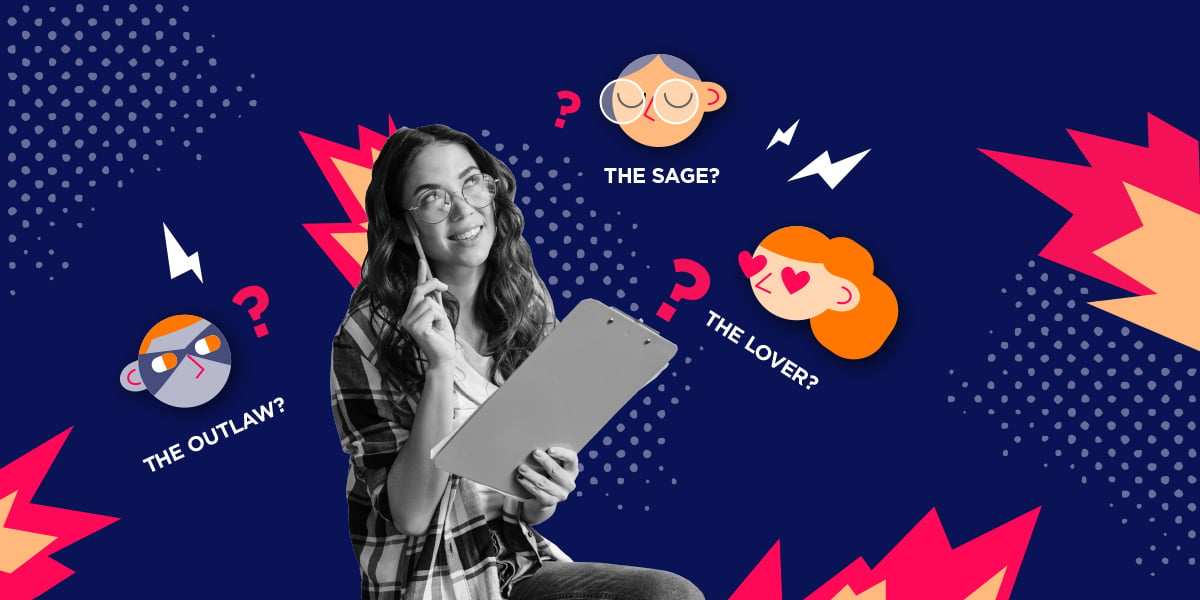
You know how you can recognize a Nike ad before the swoosh even shows up? Someone is running in the rain at 5 a.m., the music builds, and you already know who paid for this. Nobody told you. You just recognized the character, and that’s basically what brand archetypes are about.
It’s less about logos and color palettes and more about personality: brands that act like the same person every time you meet them. People don’t say they “love” a product spec. They say it about brands that feel like someone they know.
In this article we cover:
- What brand archetypes are and where the idea comes from
- Why they work for businesses
- The four core motivations the archetypes are grouped into
- All 12 brand archetypes, with their brand voice, typical messaging and real-life examples
- How to choose the right archetype for your brand
- How archetypes work for tech, SaaS and B2B products, including AI assistants
Brand archetypes are a powerful tool for unlocking deep connections with your audience—by aligning your design with the right archetype, you’re not just shaping a brand; you’re crafting a story that resonates with the emotions and values of your users.
Izabela Kurkiewicz

Need help with the branding and design of your product? At Iterators, we design, build and maintain custom software and apps for startups and enterprise businesses.

Schedule a free consultation with Iterators. We’re happy to help you find the right solution.
What are Brand Archetypes?
A brand archetype is a character your brand plays: the rebel, the caregiver, the wise guide, the joker. Instead of handing customers a list of values, you give them a persona they already understand.
Why does that work? Because these characters show up everywhere, in myths, fairy tales, and pretty much every movie you’ve ever seen. Nobody needs the rebel explained to them. (You’ve met him. He has a leather jacket.) So when a brand acts like one of these characters consistently, people get it right away, remember it, and can tell it apart from the competition.
There are 12 widely used brand archetypes. Each one is built around a core desire, such as freedom, belonging, mastery, or control, and each comes with its own voice, look, and way of talking to customers. Most strong brands pick one and sometimes borrow a trait or two from a second.
History of Brand Archetypes
“If you don’t give the market the story to talk about, they’ll define your brand’s story for you.”
David Brier

The idea goes back to Carl Jung, the Swiss psychiatrist. In the first half of the 20th century, he noticed the same characters popping up in myths and dreams across completely different cultures: the hero, the trickster, the wise old man, the mother. He called them archetypes and argued that they live in a “collective unconscious,” which is basically a set of stories all humans share without ever having to learn them.
Here’s the part that often gets mixed up: Jung never wrote about brands, and he didn’t come up with 12 brand archetypes. That happened much later, in 2001, when marketers Margaret Mark and Carol S. Pearson published The Hero and the Outlaw: Building Extraordinary Brands Through the Power of Archetypes. They turned Jung’s ideas into a practical toolkit of 12 archetypes, grouped around four basic human motivations. Pretty much every brand archetype framework you’ll find today, including this one, builds on their model.
The logic behind it is simple. Every archetype is tied to something people fundamentally want. If your brand keeps showing up as the same character, customers feel that you understand what they want, what they expect, and what they’re worried about. And people tend to pick the company they feel most comfortable with, not the one with the longest feature list.
Why Brand Archetypes Work
So what do brand archetypes actually do for a business? Basically four things.
It sets expectations for every interaction
Once customers know what character you are, they know what to expect from you. A Caregiver brand comes across as helpful and supportive, so people expect exactly that on the website, in the app, and on the phone. Deliver it every time, and that’s how trust gets built.
It connects what customers want with what you offer
Each archetype maps to a desire: creativity, safety, belonging, achievement. Choosing one helps people see how your product gets them closer to their own goals, not just which features it has.
It helps you stand out
An archetype pushes you to dig into your brand’s history and the “why” behind it. That matters most when a competitor has the same archetype. Then your origin story and the way you express the character are what tell you apart.
It keeps everyone on the same page
Customers can meet your brand anywhere: on social media, in a search result, in a product review, on a sales call, or in a chat with your AI assistant. When everyone who writes or designs for the brand knows the archetype, all of those moments sound like the same company. That consistency is what builds loyalty, both from customers and from the people who work for you.
The Four Core Motivations Behind Brand Archetypes
Mark and Pearson sorted the 12 brand archetypes into four groups, based on the human need each one answers. It’s a handy shortcut: figure out which need your brand serves first, then pick the archetype inside that group.
| Core motivation | What customers want | Archetypes |
|---|---|---|
| Independence and fulfillment | To find happiness, truth, and freedom on their own terms | Innocent, Sage, Explorer |
| Mastery and risk | To achieve, change things, and leave a mark | Hero, Outlaw, Magician |
| Belonging and enjoyment | To connect with others, be accepted, and have fun | Everyman, Lover, Jester |
| Stability and control | To feel safe, create order, and provide structure | Caregiver, Creator, Ruler |
The groups also explain why some combinations just don’t work. The Outlaw wants to break the rules and the Ruler wants to make them. A brand trying to be both ends up sounding like it can’t make up its mind.
The 12 Brand Archetypes with Examples
Here’s the full cast of brand archetypes. Each graphic shows the archetype’s core desire, brand voice, typical lines, and example brands. Below each one you’ll find what those brands actually do, what the archetype is afraid of, where it goes wrong, how it tends to look, and how it shows up in tech products.
1. The Outlaw Archetype

The Outlaw is the one who says, “This is broken, and we’re not playing along.” It promises liberation: from boring defaults, from the rules everyone else follows, from the big player people quietly resent.
Diesel built its ads on provocation, including its deliberately absurd “Be Stupid” campaign. MTV became the channel that played what regular TV wouldn’t. Red Bull basically sells stunts that look slightly irresponsible on purpose. And the second line on the graphic, “Screw it, let’s ride,” comes from a 2008 Harley-Davidson campaign. In tech, think of challenger products defined by what they reject, like 37signals, the company behind Basecamp and HEY, which has spent years poking fun at venture-funded growth culture.
- Brand voice: rebellious, disruptive, liberated, outrageous
- Afraid of: being powerless, or turning into just another mainstream option
- Where it goes wrong: rebellion without a cause, which pushes away everyone who isn’t already a fan
- Usually looks like: black, high contrast, aggressive reds, raw or distressed type
2. The Magician Archetype

The Magician promises transformation. You know that feeling when something just works and you have no idea how? That’s the Magician’s whole brand. It’s less about power over people and more about the power to make things happen.
Disney is the classic example, with films, music, and parks built around the promise that dreams come true. Polaroid’s instant camera felt like a magic trick when it came out, and the brand still runs on that feeling. Tesla built its early brand on the sense that the future had shown up ahead of schedule. In tech, AI products lean hard on the Magician: type what you want, and it appears.
Tesla is also a good reminder that an archetype is a promise, not a label. Customers judge a brand by everything it does, including its leadership, its public behavior, and how it handles mistakes, not only by its product and ads. In recent years, a lot of the conversation around Tesla has been about its CEO rather than its cars, and that has changed how some people see the brand. The magic lasts only as long as people keep believing in it.
- Brand voice: charismatic, mystical, healing, compelling
- Afraid of: unintended consequences
- Where it goes wrong: manipulation and overpromising, like a demo that does more than the real product ever will
- Usually looks like: deep purples and midnight blues, gradients, glow effects
3. The Hero Archetype

The Hero wants to prove itself through courage and hard work, and it wants you to do the same. The message is basically: push hard enough and you’ll get there.
“Just do it,” the second line on the graphic, might be the most famous Hero slogan ever. Nike doesn’t really sell shoes; it sells the idea that anyone can be an athlete. The Red Cross shows the self-sacrificing side, showing up when disaster hits. BMW’s “The Ultimate Driving Machine” turns the car into a tool for mastery. In tech, fitness apps like Strava and Garmin talk to their users like Heroes, and so do many cybersecurity vendors. CrowdStrike’s “We stop breaches” is a Hero promise in three words.
- Brand voice: courage, faith, strength, sacrifice
- Afraid of: weakness and vulnerability
- Where it goes wrong: arrogance, or messages that make customers feel inadequate instead of capable
- Usually looks like: bold primary colors (red especially), strong sans-serif type, action shots
4. The Lover Archetype

The Lover is about closeness and pleasure. Romance is part of it, sure, but so are friendship, family, and the simple joy of beautiful, indulgent things. Lover brands make you feel wanted and special.
“Share the fantasy” on the graphic is the tagline of Chanel’s famous 1979 No. 5 commercial, directed by Ridley Scott. Häagen-Dazs sells indulgence more than ice cream. Nescafé ran one of the best-known Lover campaigns ever: its Gold Blend ads in the UK followed a slow-burning romance between two neighbors, one cup of coffee at a time. In tech, dating apps are the obvious case. Hinge’s “designed to be deleted” is a clever one, because the brand wants you to find someone, not to keep swiping.
- Brand voice: sensual, seductive, magnetic, passionate
- Afraid of: being unwanted
- Where it goes wrong: vanity, or losing yourself trying to please everyone
- Usually looks like: reds, burgundies and golds, soft focus, elegant serif type
5. The Jester Archetype

The Jester wants everyone to have a good time. It uses humor to connect, and it’s often the fastest way to make a boring category memorable.
The first line on the graphic is Old Spice’s: “The original. If your grandfather hadn’t worn it, you wouldn’t exist.” The brand’s 2010 “The Man Your Man Could Smell Like” campaign turned a dusty aftershave into a Jester icon. Mailchimp made email marketing, which is not exactly a party topic, fun with its chimp mascot and quirky tone. Ben & Jerry’s does the same with its flavor names. The second line, “Melts in your mouth, not in your hand,” belongs to M&M’s, another Jester favorite. In tech, Duolingo’s owl and its famously unhinged social media accounts are the modern Jester playbook.
- Brand voice: comedic, playful, optimistic, over the top
- Afraid of: boredom
- Where it goes wrong: joking at the wrong moment (nobody wants a pun when their payment just failed)
- Usually looks like: bright, saturated colors, mascots and illustration, rounded type
6. The Everyman Archetype

The Everyman just wants to belong. These brands are down-to-earth and honest. They don’t try to be special; they try to be for everyone.
IKEA describes its vision as “to create a better everyday life for the many people.” That’s the first line on the graphic, and basically the Everyman in one sentence. eBay was built on the idea that anyone can buy or sell anything. Wrangler sells jeans as dependable workwear, not as a fashion statement. In tech, WhatsApp is a classic Everyman: simple, free, and used by everyone from teenagers to grandparents.
- Brand voice: friendly, down-to-earth, humble, genuine
- Afraid of: being left out
- Where it goes wrong: blandness, being so ordinary that nobody notices you
- Usually looks like: denim blues and earthy tones, photos of real people instead of models
7. The Caregiver Archetype

The Caregiver wants to protect and help. These brands lead with empathy and talk to you in a warm, reassuring voice, like the friend who always asks if you’ve eaten yet.
“For every child” is UNICEF’s own tagline. Johnson’s built its brand on gentle products for babies, and NIVEA on caring for your skin. None of them promise excitement. They promise you’ll be looked after. In tech, wellbeing apps like Headspace and Calm are Caregivers, and so are many products in healthcare software.
- Brand voice: warm, caring, compassionate, generous
- Afraid of: selfishness and ingratitude
- Where it goes wrong: care that slowly turns into control
- Usually looks like: soft blues, greens and whites, rounded shapes, gentle photography
8. The Ruler Archetype

The Ruler brings order to chaos. These brands project authority and stability, and they offer customers a sense of control, often with a bit of status on top.
Rolex’s “It doesn’t just tell time. It tells history,” the second line on the graphic, ties the watch to records, wins, and big moments. Hugo Boss sells tailored authority. Microsoft is the Ruler of the office: for decades it has set the standard tools companies run on. In tech, enterprise platforms like Oracle and SAP speak Ruler too, with their talk of governance, compliance, and security. If you sell to large organizations, that’s the language their buyers expect.
- Brand voice: commanding, powerful, articulate, refined
- Afraid of: chaos and being overthrown
- Where it goes wrong: arrogance and rigidity
- Usually looks like: navy, black and gold, serif type, crests and seals
9. The Creator Archetype

The Creator wants to make things that last and to help other people make things too. It’s less about selling a finished product and more about handing you the tools.
Apple’s 1997 “Think different” campaign, the second line on the graphic, celebrated people who create rather than follow. YouTube’s original slogan, “Broadcast Yourself,” gave everyone a camera and an audience. Crayola does the same for kids. In tech, design tools like Figma, Canva, and Adobe are Creator brands, and their marketing is usually full of things their users have made.
- Brand voice: imaginative, daring, inspirational, provocative
- Afraid of: mediocrity
- Where it goes wrong: perfectionism, and ideas that never ship
- Usually looks like: bold color or bold whitespace, custom type, users’ work on display
10. The Innocent Archetype

The Innocent is all about simplicity, honesty, and optimism. It wants you to feel good and safe, with no fine print.
“You are more beautiful than you think” comes from Dove’s 2013 Real Beauty Sketches campaign. Coca-Cola has been selling happiness for decades (“Open Happiness” was its global slogan from 2009). McDonald’s goes for the same simple, family-friendly pleasure. In tech, family-friendly brands like Nintendo lean Innocent, and so do apps whose whole pitch is “one button, nothing to worry about.”
- Brand voice: optimistic, honest, humble, wholesome
- Afraid of: doing something wrong and getting punished for it
- Where it goes wrong: naivety. When an Innocent brand gets caught in a scandal, it hurts more than most
- Usually looks like: white and pastels, clean layouts, simple and cheerful imagery
11. The Sage Archetype

The Sage wants to understand the world and share what it learns. These brands earn trust through expertise, and they treat you like you’re smart.
Google’s mission is to organize the world’s information and make it universally accessible and useful, which is about as Sage as it gets. The New York Times and National Geographic built their names on reporting and research. “Ideas worth spreading,” the second line on the graphic, is TED’s tagline. In tech, the Sage is everywhere among consultancies, analytics platforms, and developer tools, where buyers want to see real expertise before they sign anything.
- Brand voice: experienced, intelligent, wise, moral
- Afraid of: being misled
- Where it goes wrong: talking down to people, or overthinking everything
- Usually looks like: navy, grey and muted tones, serif type, charts and data
12. The Explorer Archetype

The Explorer wants freedom. These brands invite you out of your comfort zone: try something new, go somewhere you haven’t been yet.
“Never stop exploring” is The North Face’s slogan. NASA is exploration in its purest form. GoPro technically sells cameras, but its brand is really the footage people bring back from mountains, oceans, and skies. In tech, travel and outdoor apps are natural Explorers, and so are tools that promise independence: work from anywhere, build without asking for permission.
- Brand voice: ambitious, fearless, exciting, independent
- Afraid of: being trapped
- Where it goes wrong: aimlessness, always moving on and never committing
- Usually looks like: earthy greens and browns, wide landscapes, rugged type
How to Choose Your Brand Archetype
There are plenty of “which of the brand archetypes is yours?” quizzes online. They’re fun. They’re also not how you should decide. Here’s a process that actually works, whether you’re naming a brand-new product or trying to fix one that feels all over the place.
1. Start with how your customers want to feel
Ask what your customers want to feel or become when they use your product. Safe? Free? Capable? Part of a group? The answer points you to one of the four core motivations. Good user personas make this step much easier.
2. Look at what you already are
Your founders’ story, the way your support team answers emails, the product decisions you’ve made so far: they all already point to an archetype. Sharpening the one you have is usually easier than inventing a new one.
3. Map your competitors
Place your main competitors on the list of 12. If they all cluster around one archetype, picking a different one is an easy way to stand out. If you share an archetype with a competitor, your story and the way you express the character have to do the work.
4. Pick one main archetype, and maybe one sidekick
One archetype leads, and a second can add nuance. A health-tech product might be a Caregiver with a bit of Sage: warm, but backed by evidence. Go beyond two, and the personality falls apart.
5. Turn it into rules people can use
An archetype that only lives in a slide deck doesn’t do much. Write down voice rules (“confident, not arrogant”), visual principles, and examples of on-brand and off-brand copy. Include product copy too, like onboarding screens, error messages, and notifications.
6. Check in regularly
Look at new campaigns and product copy through the lens of your archetype, and revisit the choice when your market or company changes. Customers notice when a brand stops acting like itself.
Archetypes fit neatly into a wider brand framework. If you’re building one from scratch, see our guides to developing an effective brand strategy and the brand pyramid framework.
Brand Archetypes for Tech, SaaS and B2B Products
It’s easy to assume brand archetypes are for sneakers and soda. But B2B buyers, the people choosing software for their company, are still people, and they still pick vendors they trust and understand.
A few patterns show up again and again in tech:
- Ruler for enterprise platforms that sell stability, governance, and control.
- Sage for consultancies, analytics, and developer tools that win on expertise.
- Hero for security and performance products that promise to defend you or help you win.
- Creator for design, no-code, and creative tools.
- Jester or Everyman for tools that make tedious work friendlier.
Which also means that going against the grain can work in your favor. A friendly Everyman stands out in a category full of Rulers.
Your archetype lives in the product, not just the ads
You know how some apps sound super friendly on their website and then send you an error message that reads like a legal notice? That’s an archetype breaking. In software, most of your brand’s voice isn’t in ads at all. It’s in onboarding screens, button labels, error messages, emails, and release notes, the small bits of text people in the industry call microcopy. A Caregiver product that shows “Error 403: Forbidden” at the exact moment you need help has broken its own promise.
Archetypes and AI assistants
Chatbots and AI assistants made this even more literal: a lot of products now have an actual personality that talks to customers. So what should it sound like when someone types “where is my order?” for the third time?
That’s where brand archetypes help. A Sage assistant cites its sources and admits when it isn’t sure. A Caregiver checks in and keeps its language gentle. A Jester can be playful, but should drop the jokes the second a customer gets frustrated. Deciding this up front keeps the assistant consistent with the rest of your brand.
Why Use Brand Archetypes?
Want to see an archetype doing its job? Here’s how the Virgin Group, often cited as a classic Outlaw brand, describes itself:
“For over 50 years, the Virgin brand has been renowned for providing unique and exceptional customer experiences. Each Virgin branded company brings a fresh, innovative, and distinctive consumer proposition, shaking up the status quo to create businesses that lift experiences out of the ordinary. This clear focus on the consumer has given the brand the ability to expand into new sectors and new geographies. From Virgin Money’s unique customer store concepts to Virgin Red’s fresh perspective on rewards and how Virgin Voyages is set to re-invent the cruising experience – each Investee Business and Licensee strives to put the customer experience at its heart. Virgin’s brand purpose is Changing Business For Good.”
“Shaking up the status quo” is the Outlaw talking. And because that personality is so clear, Virgin has been able to stretch one brand across music, airlines, banking, cruises, and more, and people still know what to expect from it. It’s less about what Virgin sells and more about who Virgin is.
Conclusion
Think back to that Nike ad from the beginning. You recognized it before you saw the logo, and that’s the whole point of brand archetypes: a character so consistent that people know it’s you without being told.
Picking an archetype gives your brand a personality people can relate to. It also makes everyday decisions easier, from how a campaign should sound to what your AI assistant says when something goes wrong.
Whether you’re a small startup or a large enterprise, the brands people remember are basically the ones that act like the same person every time.